Interested in maladministration. Estd. 2005
 RTEs Sarah McInerney ? Fianna Fail?supporter? Anthony RTEs Sarah McInerney ? Fianna Fail?supporter? Anthony
Joe Duffy is dishonest and untrustworthy Anthony
Robert Watt complaint: Time for decision by SIPO Anthony
RTE in breach of its own editorial principles Anthony
Waiting for SIPO Anthony Public Inquiry >>
Indymedia Ireland is a volunteer-run non-commercial open publishing website for local and international news, opinion & analysis, press releases and events. Its main objective is to enable the public to participate in reporting and analysis of the news and other important events and aspects of our daily lives and thereby give a voice to people.
Trump hosts former head of Syrian Al-Qaeda Al-Jolani to the White House Tue Nov 11, 2025 22:01 | imc
Rip The Chicken Tree - 1800s - 2025 Tue Nov 04, 2025 03:40 | Mark
Study of 1.7 Million Children: Heart Damage Only Found in Covid-Vaxxed Kids Sat Nov 01, 2025 00:44 | imc
The Golden Haro Fri Oct 31, 2025 12:39 | Paul Ryan
Top Scientists Confirm Covid Shots Cause Heart Attacks in Children Sun Oct 05, 2025 21:31 | imc Human Rights in Ireland >>
The Strange Death of Knowing Stuff Wed Dec 24, 2025 19:00 | Dave Summers
In his Sixth Form Christmas quiz this year, none of Dave Summers's students could name the author of To Kill a Mockingbird ? previously one of the easy questions. Another sign that wokery is dissolving our culture.
The post The Strange Death of Knowing Stuff appeared first on The Daily Sceptic.
Will Labour Ban Christmas Carols Next? Wed Dec 24, 2025 17:00 | Julian Mann
If Christmas songs fall foul of Labour's 'banter ban', Christmas carols ? with their 'offensive' assertions of the divinity of Christ that are deemed blasphemous by Islam ? are even more likely to, says Julian Mann.
The post Will Labour Ban Christmas Carols Next? appeared first on The Daily Sceptic.
Starmer to Push Britain into Stricter Net Zero Targets Under EU Deal Wed Dec 24, 2025 15:26 | Will Jones
Keir Starmer is preparing to tie Britain to the EU's Net Zero plans in a move that would impose radically stricter 'green' energy targets on homes and businesses, leading to further deindustrialisation and impoverishment.
The post Starmer to Push Britain into Stricter Net Zero Targets Under EU Deal appeared first on The Daily Sceptic.
A Crappy Christmas from Anglian Water Wed Dec 24, 2025 13:17 | Mike Wells
Dumping of sewage into rivers is supposed to happen only 'exceptionally'. But in Odell it occurred for over a third of the year. In Bedford it may be worse ? but the monitoring equipment is broken, says Mike Wells.
The post A Crappy Christmas from Anglian Water appeared first on The Daily Sceptic.
Trump Bans Two Britons From US for Curbing Free Speech Wed Dec 24, 2025 11:15 | Will Jones
Trump will deport Imran Ahmed, the Chief Executive of the Centre for Countering Digital Hate, and ban from the US Thierry Breton, the pro-censorship former EU commissioner, along with another Brit for curbing free speech.
The post Trump Bans Two Britons From US for Curbing Free Speech appeared first on The Daily Sceptic. Lockdown Skeptics >>
Voltaire, international edition
Will intergovernmental institutions withstand the end of the "American Empire"?,... Sat Apr 05, 2025 07:15 | en
Voltaire, International Newsletter N?127 Sat Apr 05, 2025 06:38 | en
Disintegration of Western democracy begins in France Sat Apr 05, 2025 06:00 | en
Voltaire, International Newsletter N?126 Fri Mar 28, 2025 11:39 | en
The International Conference on Combating Anti-Semitism by Amichai Chikli and Na... Fri Mar 28, 2025 11:31 | en Voltaire Network >>
|
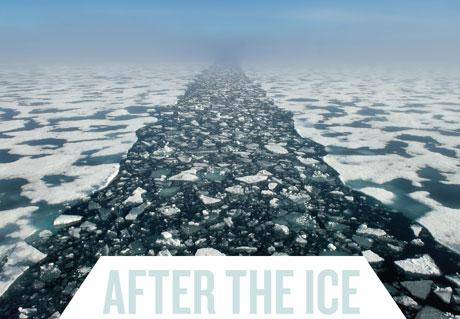
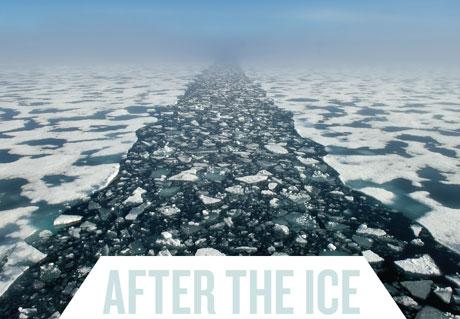
Special issue on the Arctic: After the ice
 international |
environment |
other press international |
environment |
other press
 Saturday October 15, 2011 19:32 Saturday October 15, 2011 19:32 by Climate Student by Climate Student

As the Arctic thaws, can science help to chart a sustainable
Nature has a special issue on the retreat of the Arctic Ice. Here are extracts from some articles.
Last winter, parts of the Canadian Arctic basked in record-breaking warmth. In the town of Coral Harbour, at the mouth of Hudson Bay, temperatures rose above freezing for a few days in January for the first time ever. Across the Arctic, extreme climate conditions are becoming the norm, even as the region faces other profound changes, such as the growing political power of indigenous peoples and the race to extract mineral resources (see page 172).
This week, Nature examines how these changes are affecting scientific access to the north (see page 174), and what scientists should do to keep Arctic development green (see page 179) and peaceful (see page 180). Some are calling for international regulations to safeguard the environment as ship traffic increases (see page 157). Both research and development need to consider the views of local peoples, and scientists are learning how to do so (see page 182). Locals can provide insight into environmental changes; scientists might help them to be heard.
http://www.nature.com/news/2011/111012/full/478171a.html
 Redrawing the Arctic map: The new north
The Arctic covers around 5% of the planet's surface, but it is capturing a disproportionate amount of attention. With temperatures rising at twice the global rate, the region's summer sea ice is shrinking rapidly, making access easier than ever before. At the same time, countries are racing to claim parts of the Arctic's sea floor and the vast deposits of hydrocarbons that lie beneath it.
Disappearing sea ice
Since satellite observations started in 1979, the September sea-ice extent has declined by 12% per decade, and the past 5 years have marked the lowest on record. The ice cover is thinning (see graph), making it more vulnerable to warmer temperatures. Forecasts by climate models (see graph) suggest that summer sea ice will largely disappear in the second half of the century, but the current rate of ice loss exceeds the models' forecasts, suggesting that ice-free conditions could arrive sooner.
http://www.nature.com/news/2011/111012/full/478172a.html
Scientific challenges in the Arctic: Open water
As the ice melts, fresh obstacles confront Arctic researchers.
Daniel Cressey
Last month, US researchers took a 4,000-tonne gamble when they steered the Marcus G. Langseth through the Bering Strait and into the Arctic Ocean. The 72-metre research vessel was not built to plow through ice, so it had never ventured that far poleward before.
But the rules are changing quickly in the new north. Managers at the US National Science Foundation (NSF), which owns the ship, decided to send the Langseth into the Arctic after reviewing satellite images that showed that the intended survey area in the Chukchi Sea had been largely clear of ice for four of the past five summers.
In an e-mail to Nature during the cruise, its principal investigator, Bernard Coakley, said: "We are rolling the dice a bit to take her up north." But the bet paid off for Coakley, a marine geologist at the University of Alaska Fairbanks. Sea-ice coverage was at near-record lows this summer, and the Langseth — due back in dock this week — has not encountered any troubling ice.
With the Arctic warming roughly twice as fast as the rest of the globe, there is more need than ever to monitor the changing conditions there. And the retreating summer sea ice is opening up new options for scientists who want to explore the once difficult-to-reach Arctic waters, allowing them, for example, to use vessels other than icebreakers.
http://www.nature.com/news/2011/111012/full/478174a.html
More links at: http://www.nature.com/news/2011/111012/full/478171a.html
|







 printable version


 Digg this
 del.icio.us
 Furl
Furl Reddit
 Technorati
 Facebook
 Gab
Gab Twitter
View Full Comment Text
save preference
Comments (8 of 8)